St Edmund's Catholic Academy Logo

St Edmund's Catholic Academy

To Love and Serve the Lord

  • About Us
    • Admissions
    • Prospectus
    • Annual Report and Financial Statements
    • Floor Plan
    • Contact Us
    • St Gabriel the Archangel Multi-Academy Trust
    • Parking
    • Equality Objectives
    • Ethos and CARE values
    • Examinations
    • Gender Pay Gap Summary
    • Governance
    • Schools Financial Benchmarking
    • Inspection Reports
    • Policies
    • Pupil Premium
    • Music Development Plan
    • Academy Calendar
    • School Performance Tables
    • Senior Leadership Team
    • Vacancies
    • Remote Learning
    • Bereavement Support
    • Supporting Your Wellbeing
    • Venue Hire
  • Students
    • Bedrock Login
    • Academy Hours
    • Extended Learning Timetable
      • Lower School
      • Upper School
    • Google Classroom Help
    • Loyola Enrichment Activities
    • Independent Learning & Homework
    • Knowledge Organisers
    • GCSE Resource Site
    • GCSEPod
    • Student Mental Health Support
    • Help me study!
    • Information for Pupils
      • Information for Candidates
      • Privacy Notice for Pupils
      • Year 9 Options Booklet
      • Work Experience
    • Library
    • Safeguarding
    • History is not a Mystery Podcast
  • Parents
    • Who to Contact
    • Parent feedback
    • Latest Newsletter
    • Extended Learning Timetable
      • Lower School
      • Upper School
    • Academy Hours
    • Arbor
    • Chromebooks
    • Cost of Living Support
    • GCSE Resource Site
    • Independent Learning & Homework
      • Parental Guide to homework
      • Google Classroom Help
      • Knowledge Organisers
      • Bedrock Learning
      • GCSEPod Parental Guide
      • GCSEPod Parental Website
      • Help Me Study
      • Remote Learning Guidance
      • Chromebooks for Learning
    • Supporting your child
      • Key Information
      • Use AI for Revision
      • Safeguarding
      • School Meals
      • E-safety information
      • E-safety guidance
      • Medical Consent Form
      • Mental Health Support (Parents Page)
      • Upper School: with their GCSEs
      • Metacognition
    • Practical Information
      • Academy Bus Services
      • Uniform
        • Uniform Information
    • School Communication
      • Letters
        • Whole School Letters
        • Year 7 Letters
        • Year 8 Letters
        • Year 9 Letters
        • Year 10 Letters
        • Year 11 Letters
        • Year 12 Letters
        • Year 13 Letters
      • Parent View
    • Specific Year group information
      • Year 6 into 7
        • Transition
    • Privacy Notice for Parents/Carers
    • Parent guide to complaints
    • Year 6 into 7 Transition
    • Year 7 Welcome Video
    • Understanding your child’s progress check
      • KS3
      • KS4
      • VI form
    • Year 9 Options
      • Year 9 Options Booklet
      • Video – How to complete the Options Form
    • Free School Meals
    • School Meals
  • Staff
  • Spiritual Life
  • Attendance
    • Absence
    • Adverse Weather
    • Appointments
    • Attendance Information
    • Children Missing in Education
    • Guest/Managed Move Students
    • Leave of Absence Leaflet for Parents
    • Leave of Absence
    • Persistent Absence
    • Person of Contact
    • Punctuality
    • Registers
    • Sixth Form Attendance
  • Curriculum
    • Curriculum
    • More Able
      • What is the Loyola Academy?
      • Reading Lists for the More Able
      • Resources for Loyola Students
      • Parental Support
      • NACE Challenge Award
      • Saint Ignatius of Loyola
  • Personal Development
    • Personal Development
    • PSHE
    • Gospel and British Values
    • Afterschool / Enrichment Activities
    • CARE Award
    • Duke of Edinburgh Award
  • Inclusion Centre
  • Safeguarding
    • Safeguarding at St Edmund’s
    • Reporting a concern
    • Support Services
    • Family Hubs
  • Sixth Form
  • Careers
  • SEND
    • Our SEND offer
    • SEND Information Report
    • SEND Support Services
    • Areas of Need
    • Wolverhampton Outreach
St Edmund's Catholic Academy Logo
  • About Us
    • Admissions
    • Prospectus
    • Annual Report and Financial Statements
    • Floor Plan
    • Contact Us
    • St Gabriel the Archangel Multi-Academy Trust
    • Parking
    • Equality Objectives
    • Ethos and CARE values
    • Examinations
    • Gender Pay Gap Summary
    • Governance
    • Schools Financial Benchmarking
    • Inspection Reports
    • Policies
    • Pupil Premium
    • Music Development Plan
    • Academy Calendar
    • School Performance Tables
    • Senior Leadership Team
    • Vacancies
    • Remote Learning
    • Bereavement Support
    • Supporting Your Wellbeing
    • Venue Hire
  • Students
    • Bedrock Login
    • Academy Hours
    • Extended Learning Timetable
      • Lower School
      • Upper School
    • Google Classroom Help
    • Loyola Enrichment Activities
    • Independent Learning & Homework
    • Knowledge Organisers
    • GCSE Resource Site
    • GCSEPod
    • Student Mental Health Support
    • Help me study!
    • Information for Pupils
      • Information for Candidates
      • Privacy Notice for Pupils
      • Year 9 Options Booklet
      • Work Experience
    • Library
    • Safeguarding
    • History is not a Mystery Podcast
  • Parents
    • Who to Contact
    • Parent feedback
    • Latest Newsletter
    • Extended Learning Timetable
      • Lower School
      • Upper School
    • Academy Hours
    • Arbor
    • Chromebooks
    • Cost of Living Support
    • GCSE Resource Site
    • Independent Learning & Homework
      • Parental Guide to homework
      • Google Classroom Help
      • Knowledge Organisers
      • Bedrock Learning
      • GCSEPod Parental Guide
      • GCSEPod Parental Website
      • Help Me Study
      • Remote Learning Guidance
      • Chromebooks for Learning
    • Supporting your child
      • Key Information
      • Use AI for Revision
      • Safeguarding
      • School Meals
      • E-safety information
      • E-safety guidance
      • Medical Consent Form
      • Mental Health Support (Parents Page)
      • Upper School: with their GCSEs
      • Metacognition
    • Practical Information
      • Academy Bus Services
      • Uniform
        • Uniform Information
    • School Communication
      • Letters
        • Whole School Letters
        • Year 7 Letters
        • Year 8 Letters
        • Year 9 Letters
        • Year 10 Letters
        • Year 11 Letters
        • Year 12 Letters
        • Year 13 Letters
      • Parent View
    • Specific Year group information
      • Year 6 into 7
        • Transition
    • Privacy Notice for Parents/Carers
    • Parent guide to complaints
    • Year 6 into 7 Transition
    • Year 7 Welcome Video
    • Understanding your child’s progress check
      • KS3
      • KS4
      • VI form
    • Year 9 Options
      • Year 9 Options Booklet
      • Video – How to complete the Options Form
    • Free School Meals
    • School Meals
  • Staff
  • Spiritual Life
  • Attendance
    • Absence
    • Adverse Weather
    • Appointments
    • Attendance Information
    • Children Missing in Education
    • Guest/Managed Move Students
    • Leave of Absence Leaflet for Parents
    • Leave of Absence
    • Persistent Absence
    • Person of Contact
    • Punctuality
    • Registers
    • Sixth Form Attendance
  • Curriculum
    • Curriculum
    • More Able
      • What is the Loyola Academy?
      • Reading Lists for the More Able
      • Resources for Loyola Students
      • Parental Support
      • NACE Challenge Award
      • Saint Ignatius of Loyola
  • Personal Development
    • Personal Development
    • PSHE
    • Gospel and British Values
    • Afterschool / Enrichment Activities
    • CARE Award
    • Duke of Edinburgh Award
  • Inclusion Centre
  • Safeguarding
    • Safeguarding at St Edmund’s
    • Reporting a concern
    • Support Services
    • Family Hubs
  • Sixth Form
  • Careers
  • SEND
    • Our SEND offer
    • SEND Information Report
    • SEND Support Services
    • Areas of Need
    • Wolverhampton Outreach
St Edmund's Catholic Academy Logo
  • About Us
    • Admissions
    • Prospectus
    • Annual Report and Financial Statements
    • Floor Plan
    • Contact Us
    • St Gabriel the Archangel Multi-Academy Trust
    • Parking
    • Equality Objectives
    • Ethos and CARE values
    • Examinations
    • Gender Pay Gap Summary
    • Governance
    • Schools Financial Benchmarking
    • Inspection Reports
    • Policies
    • Pupil Premium
    • Music Development Plan
    • Academy Calendar
    • School Performance Tables
    • Senior Leadership Team
    • Vacancies
    • Remote Learning
    • Bereavement Support
    • Supporting Your Wellbeing
    • Venue Hire
  • Students
    • Bedrock Login
    • Academy Hours
    • Extended Learning Timetable
      • Lower School
      • Upper School
    • Google Classroom Help
    • Loyola Enrichment Activities
    • Independent Learning & Homework
    • Knowledge Organisers
    • GCSE Resource Site
    • GCSEPod
    • Student Mental Health Support
    • Help me study!
    • Information for Pupils
      • Information for Candidates
      • Privacy Notice for Pupils
      • Year 9 Options Booklet
      • Work Experience
    • Library
    • Safeguarding
    • History is not a Mystery Podcast
  • Parents
    • Who to Contact
    • Parent feedback
    • Latest Newsletter
    • Extended Learning Timetable
      • Lower School
      • Upper School
    • Academy Hours
    • Arbor
    • Chromebooks
    • Cost of Living Support
    • GCSE Resource Site
    • Independent Learning & Homework
      • Parental Guide to homework
      • Google Classroom Help
      • Knowledge Organisers
      • Bedrock Learning
      • GCSEPod Parental Guide
      • GCSEPod Parental Website
      • Help Me Study
      • Remote Learning Guidance
      • Chromebooks for Learning
    • Supporting your child
      • Key Information
      • Use AI for Revision
      • Safeguarding
      • School Meals
      • E-safety information
      • E-safety guidance
      • Medical Consent Form
      • Mental Health Support (Parents Page)
      • Upper School: with their GCSEs
      • Metacognition
    • Practical Information
      • Academy Bus Services
      • Uniform
        • Uniform Information
    • School Communication
      • Letters
        • Whole School Letters
        • Year 7 Letters
        • Year 8 Letters
        • Year 9 Letters
        • Year 10 Letters
        • Year 11 Letters
        • Year 12 Letters
        • Year 13 Letters
      • Parent View
    • Specific Year group information
      • Year 6 into 7
        • Transition
    • Privacy Notice for Parents/Carers
    • Parent guide to complaints
    • Year 6 into 7 Transition
    • Year 7 Welcome Video
    • Understanding your child’s progress check
      • KS3
      • KS4
      • VI form
    • Year 9 Options
      • Year 9 Options Booklet
      • Video – How to complete the Options Form
    • Free School Meals
    • School Meals
  • Staff
  • Spiritual Life
  • Attendance
    • Absence
    • Adverse Weather
    • Appointments
    • Attendance Information
    • Children Missing in Education
    • Guest/Managed Move Students
    • Leave of Absence Leaflet for Parents
    • Leave of Absence
    • Persistent Absence
    • Person of Contact
    • Punctuality
    • Registers
    • Sixth Form Attendance
  • Curriculum
    • Curriculum
    • More Able
      • What is the Loyola Academy?
      • Reading Lists for the More Able
      • Resources for Loyola Students
      • Parental Support
      • NACE Challenge Award
      • Saint Ignatius of Loyola
  • Personal Development
    • Personal Development
    • PSHE
    • Gospel and British Values
    • Afterschool / Enrichment Activities
    • CARE Award
    • Duke of Edinburgh Award
  • Inclusion Centre
  • Safeguarding
    • Safeguarding at St Edmund’s
    • Reporting a concern
    • Support Services
    • Family Hubs
  • Sixth Form
  • Careers
  • SEND
    • Our SEND offer
    • SEND Information Report
    • SEND Support Services
    • Areas of Need
    • Wolverhampton Outreach
Category

Front Page News

Post inside this category will show up on the front page

Pentecost: The Gift of the Holy Spirit and the Birth of the Church

19th May 2024Rhiannon Watts-Robinson

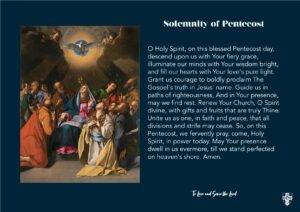
As Catholics around the world prepare to celebrate Pentecost, we enter into a sacred season of renewal, rejoicing in the outpouring of the Holy Spirit and the birth of the Church. Pentecost marks the culmination of the Easter season, commemorating the momentous event when the disciples received the promised gift of the Holy Spirit, empowering them to boldly proclaim the Gospel to all nations.

The feast of Pentecost finds its roots in the Jewish festival of Shavuot, which commemorates the giving of the Law of Moses on Mount Sinai. For Christians, Pentecost represents the fulfilment of another promise – the coming of the Holy Spirit, foretold by Jesus before His ascension into heaven. As the disciples gathered in prayer in the upper room, they were filled with the Holy Spirit in a powerful and transformative way, igniting a flame of faith that would spread though the world.

The account of Pentecost in Acts of the Apostles vividly describes the descent of the Holy Spirit upon the disciples with tongues of fire and the gift of speaking in different languages. This miraculous event not only emboldened the disciples to proclaim the Gospel fearlessly but also symbolised the universality of the Church, which transcends linguistic and cultural barriers to embrace people of every nation, tribe and tongue.

In receiving the Holy Spirit, the disciples were equipped with supernatural gifts and charisms, empowering them to fulfil the mission entrusted to them by Christ. They were emboldened to preach the Good News, to heal the sick, to cast out demons, and to baptise converts into the faith. Through the Holy Spirit, the Church was born – a living and dynamic communion of believers united in Christ and guided by His Spirit.

The feast of Pentecost reminds us that the same Holy Spirit who descended upon the disciples continues to dwell within the Church and within each one of us. Through the sacraments of Baptism and Confirmation, we are sealed with the gift of the Holy Spirit, equipping us for our mission as disciples of Christ and witnesses of His love and mercy.

As Catholics, we are called to be docile to the promptings of the Holy Spirit, allowing Him to guide and empower us in our journey of faith. Whether through acts of charity, evangelisation or prayer, we are invited to cooperate with the Spirit’s work of renewal and transformation in the world. Like the disciples at Pentecost, we are called to be bold and courageous in our witness to the Gospel. trusting in the Spirit’s guidance and strength to lead us wherever He may send us.

As we celebrate Pentecost, let us open our hearts to the transforming power of the Holy Spirit, inviting Him to renew and rejuvenate our faith. May we be inspired by the example of the early Church, whose fervent prayer and openness to the Spirit’s guidance led to a great outpouring of grace and the spread of the Gospel to the ends of the earth. May we, as members of the Church, continue to be instruments of God’s love and mercy, bearing witness to the risen Christ, continue to be instruments of God’s love and mercy, bearing witness to the risen Christ and His saving message in the world today.

2021,catholic,Front Page News

Preserving History, Inspiring Faith: International Museum Day

18th May 2024Rhiannon Watts-Robinson

As the world celebrates International Museums Day, museums around the world invite visitors to explore the rich tapestry of human history, culture and creativity. For Catholics, museums offer more than just an opportunity for cultural enrichment – they serve as repositories of faith, preserving the sacred heritage and spiritual treasures of the Church.

Within the halls of museums, priceless artefacts and works of art bear witness to the history and spirituality of the Catholic Church. From ancient manuscripts and illuminated texts to exquisite religious art and artefacts, these treasures serve as tangible links to our religious heritage, connecting us to the saints, martyrs and traditions of the past.

Museums dedicated to Catholic art and history play a vital role in preserving these sacred artefacts, ensuring that future generations have access to the rich legacy of our faith. Through meticulous conservation efforts and scholarly research, these institutions safeguard the integrity and authenticity of religious relics, allowing them to continue to inspire and edify believers for centuries to come.

For Catholics, the experience of visiting a museum goes beyond mere aesthetic appreciation – it is a spiritual encounter with sacred beauty. Whether gazing upon a medieval illuminated manuscript, venerating a relic of a beloved saint, or admiring a masterpiece of religious art, each encounter with a museum artefact has the potential to deepen our appreciation for the divine.

Through its beauty and symbolism, religious art communicates the truths of the faith in a languages that transcends words, inviting viewers to reflect on the mysteries of God’s love and redemption. Our encounter with the sacred artefacts housed within museums can be a catalyst for spiritual growth and renewal. The stories of saints, depicted in paintings and sculptures, inspire us to emulate their virtues and strive for holiness in our own lives. Relics, tangible reminders of the communion of saints, connect us to the spiritual presence of those who have gone before us, offering intercession and encouragement in our journey of faith.

Let us give thanks for the invaluable role that museums play in preserving the heritage of our Catholic faith. May we cherish and support these institutions as custodians of sacred art and artefacts, recognising their role in inspiring faith, fostering devotion and enriching the spiritual lives of believers around the world. May our encounters with the treasures housed within museums walls deepen our love for God and His Church, guiding us ever closer to the source of all beauty and truth.

Front Page News

Gazing at the Cosmos: International Astronomy Day

18th May 2024Rhiannon Watts-Robinson

As the world celebrates International Astronomy Day, enthusiasts and stargazers alike come together to marvel at the wonders of the cosmos. Yet, beyond the scientific inquiry lies a profound sense of awe and wonder that resonates deeply with the teachings of the Catholic Church.

In the Book of Genesis, we read, “In the beginning, God created the heavens and the earth” (Genesis 1:1). This foundational truth lies at the heart of Catholic belief: that the universe, with all its splendour and intricacy, is the handiwork of a loving and creative God. From the vast expanse of galaxies to the smallest subatomic particles, every corner of the cosmos reflects the divine craftsmanship and wisdom of its Creator.

For Catholics, the study of astronomy is not merely an academic pursuit but a spiritual endeavour – an opportunity to encounter God’s presence and majesty in the beauty of His creation. Through telescopes and observatories, we peer into the depths of space, marvelling at the countless stars, planets and nebulae that populate the heavens. Each celestial object serves as a testament to the boundless creativity and generosity of God, inviting us to contemplate the mysteries of His infinite love and providence.

Throughout history, Catholic theologians and mystics have contemplated the heavens as a means of deepening their understanding of God and His plan for humanity. St Augustine of Hippo, in his seminal work “The City of God”, reflected on the celestial order as a reflection of the divine harmony and beauty that pervades all creation. Similarly, St Thomas Aquinas, in his Summa Theologica, explored the relationship between God as the First Cause and the natural order of the universe.

For Catholics, the study of astronomy offers a glimpse into the grandeur and mystery of God’s creation, inspiring wonder, humility and gratitude. As we contemplate the vastness of the cosmos, we are reminded of our pace within the cosmic tapestry – tiny yet significant, finite yet beloved by the Creator of all things.

In his encyclical “Fides et Ratio” (Faith and Reason), Pope St John Paul II affirmed the complementary relationship between faith and reason, recognising that both are essential for the pursuit of truth and understanding. Astronomy, with its emphasis on empirical observation and scientific inquiry, offers valuable insights into the workings of the universe, enriching our understanding of God’s creation.

As Catholics, we embrace the findings of modern science, including the discoveries of astronomy, as windows through which we glimpse the beauty and complexity of God’s creation. Far from being at odds with faith, astronomy invites us to contemplate the mysteries of the universe with awe and reverence, deepening our appreciation for the Creator who spoke the cosmos into being.

Let us pause to marvel at the wonders of the cosmos and give thanks for the gift of creation. May we approach the study of astronomy with humility and reverence, recognising the beauty, complexity and mystery of the universe as reflection of God’s boundless love and wisdom. May our exploration of the heavens deepen our faith and inspire us to become ever more grateful stewards of God’s magnificent creation.

Front Page News

Nurturing Wholeness: Mental Health Awareness Week

13th May 2024Rhiannon Watts-Robinson

As Mental Health Awareness Week unfolds, it presents an opportune moment for reflection on the intersection of mental well-being and spirituality. Mental health affects individuals of all backgrounds, and the Catholic Church offers a rich tapestry of resources, teachings and support networks to aid in the journey towards healing and wholeness.

Central to the teachings of Jesus Christ is the commandment to love one another as He has loved us (John 15:12). At St Edmund’s this is part of our CARE values as we encourage our students to support their peers in all they do. Jesus’ divine love extends to all aspects of life, including mental health. In the Catholic tradition, individuals grappling with mental health challenges are viewed with compassion and empathy, recognising the inherent dignity and worth of every person created in the image and likeness of God.

As Catholics, we are called to be instruments of God’s love and mercy, offering support, encouragement and companionship to those struggling with mental illness. This may involve lending a listening ear, providing practical assistance, or simply being present to accompany individuals on their journey towards healing and wholeness. Through acts of kindness and solidarity, we embody the compassionate heart of Christ and create spaces of refuge and acceptance for those in need.

In addition to offering spiritual and emotional support, the Catholic Church acknowledges the importance of seeking professional help and treatment for mental health concerns. At St Edmund’s we are proud to have two academy counsellors available for our students to talk to when they need support. Our pastoral team also offer support to students with any stress or anxiety. Mental health concerns are not a sign of spiritual weakness or moral failing but rather a complex interplay of biological, psychological and environmental factors that require holistic care and intervention.

The Catholic tradition affirms the value of both prayer and therapy in promoting mental well-being, recognising that spiritual and psychological healing are interconnected aspects of the human experience. Pastoral resources, counselling services and support groups within the Church can complement the expertise of mental health professionals, offering a comprehensive approach to care that addresses the spiritual, emotional and physical dimensions of the person.

Let us recommit ourselves to fostering a culture of compassion, understanding and support within the Catholic community, our Academy community and beyond. May we be advocates for mental health awareness and destigmatisation, recognising the inherent dignity and worth of every person, regardless of their struggles or challenges. May we, inspired by the teachings of Christ and the witness of the saints, be agents of healing and hope in a world hungering for compassion and understanding.

Front Page News

Our Lady of Fatima: A Beacon of Hope and Faith

13th May 2024Rhiannon Watts-Robinson

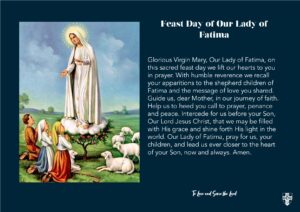
As the Feast Day of Our Lady of Fatima dawns upon us, Catholics around the world are called to commemorate the apparitions of the Blessed Virgin Mary to three shepherd children in Fatima, Portugal, in 1917. This sacred occasion holds deep significance within the Catholic faith, serving as a reminder of Mary’s maternal love, intercession, and the urgent call to conversion and prayer.

In the spring of 1917, three young shepherd children – Lucia dos Santos and her cousins, Francisco and Jacinta Marto – experienced a series of extraordinary visions of the Virgin Mary while tending their sheep in Fatima. Over the course of six months, Mary appeared to the children, delivering messages of peace, repentance and prayer.

At the heart of Mary’s message was a call to conversion and penance, urging humanity to turn away from sin and return to God with sincere hearts. She revealed to the children the reality of hell and the importance of offering prayer and sacrifices for the salvation of souls. Through her apparitions, Our Lady of Fatima emphasised the power of prayer, particularly the Rosary, as a means of obtaining peace for the world and the conversion of sinners.

On 13th October 1917, the culmination of the Fatima apparitions occured with the Miracle of the Sun – a miraculous event witnessed by thousands of onlookers gathered at the Cova da Iria. As the sun danced in the sky, emitting vibrant colours and appearing to descend towards the Earth, the crowds were filled with awe and wonder, recognising the supernatural nature of this event.

The Miracle of the Sun served as a confirmation of the authenticity of the Fatima apparitions and underscored the urgency of Mary’s message for the world. It was a powerful manifestation of God’s presence and a call to faith, inspiring countless individuals to turn to Our Lady of Fatima in prayer and devotion.

Nearly a century later, the message of Our Lady of Fatima remains as relevant and urgent as ever. In a world plagued by division, violence and moral decay, Mary’s call to prayer, penance and conversion resonates deeply with believers. she invites us to heed her words and embrace the path of holiness and reconciliation, trusting in God’s mercy and grace.

As we commemorate the Feast Day of Our Lady of Fatima, let us recommit ourselves to prayer and penance for the conversion of hearts and the establishments of peace in our world. May we draw inspiration from the faith and devotion of the shepherd children of Fatima, who responded to Mary’s call with unwavering trust and love. May Our Lady of Fatima, Queen of Peace, intercede for us and guide us on our journey of faith, leading us ever closer to her Son, Jesus Christ.

2021,catholic,Front Page News

Embracing Compassion: Dementia Awareness Week

13th May 2024Rhiannon Watts-Robinson

As we enter Dementia Awareness Week, we are given an opportunity to reflect on the virtues of compassion, understanding and empathy, particularly through the lens of the Catholic faith. Dementia affects millions worldwide, impacting not only the individuals who live with it but also their families and communities.

Dementia is more than just memory loss; it’s a complex set of symptoms that include impaired thinking, reasoning and behaviour, often leading to difficulties in performing daily tasks. For those living with dementia, each day can present new challenges and uncertainties, causing frustration, fear and sometimes even a sense of loss of identity.

In the Catholic tradition, every person is regarded as a precious creation of God, endowed with inherent dignity and worth. Regardless of cognitive abilities or limitation, each individual is deserving of respect, compassion and love. This fundamental belief underscores the importance of upholding the dignity of persons with dementia and ensuring that they are treated with the utmost care and reverence.

Central to the teachings of Jesus Christ is the commandment to love one another as He has loved us. This divine love transcends boundaries and encompasses all. In the Gospels, we see jesus exemplifying compassion and empathy in His interactions with the marginalised and the vulnerable. He healed the sick, comforted the sorrowful, and embraced those society often overlooked.

As followers of Christ, we are called to emulate His example by extending compassion and support to individuals living with dementia and their caregivers. This involves not only providing practical assistance but also fostering a culture inclusion and understanding within our communities. It means being patient listeners, offering a helping hand, and creating spaces where those affected by dementia feel valued and respected.

Caring for someone with dementia can present numerous challenges, both emotionally and practically. It requires immense patience, resilience, and often sacrifices on the part of the caregivers. However, amidst the difficulties lie opportunities for profound acts of love and grace.

As we observe Dementia Awareness Week, let us take concrete steps to support individuals and families affected by dementia. This may involve volunteering at local support groups, advocating for dementia-friendly initiatives in our communities, or simply reaching out with a kind word or gesture of solidarity. Additionally, we can educate ourselves about dementia to dispel misconceptions and foster greater empathy and understanding.

This week serves as a poignant reminder of our collective responsibility to uphold the dignity and worth of every person, especially those confronting dementia. In embracing compassion and solidarity, we honour the inherent value of individuals living with dementia and affirm their rightful place within our communities. As we journey together in faith, may we be guided by the timeless teachings of the Catholic Church, and may our hearts be open to the transformative power of love and compassion.

Front Page News

Building a Fairer World: World Fair Trade Day

11th May 2024Rhiannon Watts-Robinson

World Fair Trade Day serves as a global celebrations of fair trade practices and their impact on the lives of farmers, workers and artisans around the world. From the fields of coffee farms to the workshops of artisans, Fair Trade initiatives uphold the principles of justice, solidarity and dignity – values deeply rooted in Catholic social teaching.

At the heart of Catholic social teaching lies the principle of solidarity – the recognition of our interconnectedness and shared responsibility for one another. This principle resonates deeply with the ethos of Fair Trade, which seeks to empower marginalised producers and workers by ensuring fair wages, safe working conditions and sustainable livelihoods. Just as Jesus showed compassion for the poor and oppressed, so too are we called to stand in solidarity with those who are exploited and marginalised in our global economy.

Fair Trade embodies the spirit of Catholic social teaching through it commitment to promoting human dignity and social justice. By providing fair prices, stable markets and support for community development projects, Fair Trade empowers farmers and workers to improve their lives and build a brighter future for themselves and their families. Through our support for Fair Trade products, we can contribute to the building of a more just and equitable world, where the inherent dignity of every person is respected and upheld.

As Catholics, we are called to be stewards of God’s creation and to work for the common good for all. Pope Francis, in his encyclical Laudato si’, calls for a renewed sense of solidarity and responsibility towards our brothers and sisters who are most vulnerable to the impacts of environmental degradation and economic injustice. Fair Trade offers a practical way for us to live out these principles by supporting sustainable agriculture, ethical production practices and community empowerment initiatives.

World Fair Trade Day invites us to reflect on our own consumer choices and their impact on the lives of others. By choosing Fair Trade products, we can help create a more just and sustainable world for current and future generations. Whether it’s purchasing Fair Trade coffee, chocolate or clothing, eac decision we make has the power to make a difference in the lives of producers and workers around the world.

Let us renew our commitment to living in solidarity with our brothers and sisters around the world. Let us support Fair Trade initiatives that promote dignity, justice and sustainability in our global economy. Let us pray for all those who are working tirelessly to build a fairer and more equitable world, that they may be strengthened and sustained in their noble mission by the grace of God.

Front Page News

Unity in Diversity: Celebrating Europe Day

9th May 2024Rhiannon Watts-Robinson

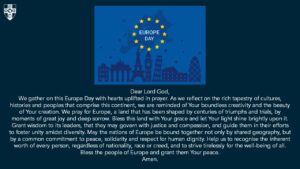
Europe Day commemorates the historic Schuman Declaration of 1950, which laid the foundation for the European Union (https://bit.ly/3WobeCc). It serves as a reminder of the importance of unity, peace and cooperation among the diverse nations of Europe. As Catholics, we recognise the significance of this day and affirm the values of solidarity, subsidiarity and respect for human dignity that underpin the European project.

At the heart of Catholic social teaching lies the principle of solidarity – the recognition of our interconnectedness and shared responsibility for one another. This principle resonates deeply with the ideals of European unity, which seek to transcend national boundaries and foster collaboration for the common good. Just as the Body of Christ is composed of many members with diverse gifts and talents, so too is Europe enriched by its cultural, linguistic and historical diversity.

The Catholic Church has long been a proponent of European unity, recognising the potential of a united Europe to promote peace, justice and reconciliation on the continent. Pope St. John Paul II, in his encyclical Centesimus Annus, praised the efforts of European leaders to build a Europe of solidarity and subsidiarity, rooted in the shared values of freedom, democracy and the rule of law.

Europe Day offers us an opportunity to reflect on the achievements of the European project and to reaffirm our commitment to the values that unite us as Europeans. It is a day to celebrate the rich tapestry of cultures, traditions and languages that make Europe a beacon of diversity and pluralism. It is also a day to recommit ourselves to the pursuit of peace and justice in our continent and beyond.

As Catholics, we are called to be ambassadors of reconciliation and builders of unity in a world often divided by conflict and division. Pope Francis has repeatedly emphasised the importance of dialogue, encounter and solidarity as antidotes to the “globalisation of indifference” that plagues our world. By fostering a culture of encounter and solidarity, we can contribute to the building of a more just, peaceful and inclusive Europe for future generations.

Let us pray for the leaders of Europe, that they may be guided by wisdom and compassion in their efforts to promote unity, justice and peace. Let us also pray for all those who are marginalised or oppressed in our continent, that they may experience the healing touch of God’s love and find hope in the promise of a more just and fraternal society. Let us commit ourselves anew to the work of building a Europe that reflects the timeless values of the Gospel – unity in diversity, solidarity in service and peace in justice.

Front Page News

Reflections of Ascension Thursday

9th May 2024Rhiannon Watts-Robinson

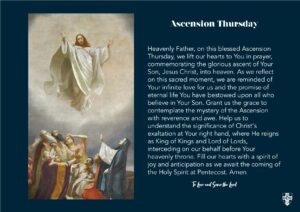
Ascension Thursday marks a pivotal moment in the liturgical calendar of the Catholic Church – the solemn commemoration of Jesus Christ’s ascension into heaven. This profound event, which occurred forty days after Easter, holds deep significance for us, reminding us of Christ’s victory over sin and death, and the promise of eternal life that awaits us in heaven.

The ascension of Jesus Christ is a testament to his divine nature and mission. As Catholics, we believe that Christ, fully human and fully divine, ascended into heaven to take his rightful place at the right hand of the Father, where he intercedes for us and reigns in glory. This momentous event not only fulfilled the promises of the prophets but also inaugurated the age of the Church, empowering the apostles to proclaim the Gospel to all nations.

The ascension is a source of hope and consolation, reminding us that Jesus Christ is not absent from our lives but present in a new and profound way. Through the outpouring of the Holy Spirit at Pentecost, Christ continues to be present in his Church, guiding, sanctifying and empowering us to be his witness in the world. As Pope Benedict XVI once remarked, “The Ascension does not point to Jesus’ absence, but tells us that he is alive in our midst in a new way.”

Moreover, the ascension challenges us to lift our gaze heavenward and to seek the things that are above. In a world often consumed by materialism, individualism and instant gratification, the ascension invites us to fix our eyes on the eternal truths of the Gospel and to live with a sense of purpose and mission. As St Paul reminds us, “Set your minds on things that are above, not on things that are on earth” (Colossians 3:2).

Ascension Thursday also serves as a reminder of our own destiny and calling as disciples of Christ. Just as Jesus ascended into heaven, so too are we called to ascend – to rise above the cares and concerns of this world and to seek the things of God. This journey of ascent is not easy, nor is it without its challenges, but it is a journey that ultimately leads to the fullness of life and communion with God.

On this Ascension Thursday, let us take time to reflect on the profound mystery of Christ’s ascension and its implications for our lives. Let us lift our hearts in gratitude for the gift of salvation and the promise of eternal life that Christ has won for us. Let us renew our commitment to follow him faithfully, trusting in his guidance and grace as we strive to build his kingdom of justice, peace and love here on earth.

2021,catholic,Front Page News

Serving with Compassion: World Red Cross Day

8th May 2024Rhiannon Watts-Robinson

In the tapestry of humanity, threads of compassion and service are woven deeply into the fabric of our existence. World Read Cross Day provides a moment to reflect on the invaluable contributions of humanitarian organisations in alleviating suffering and promoting dignity across the globe. As Catholics, our faith calls us to emulate the example of Christ, who showed boundless love and mercy to all.

At core of Catholic social teaching lies the principle of solidarity – the recognition of our interconnectedness and shared responsibility for one another. This principle resonates deeply with the mission of the Red Cross, whose volunteers selflessly serve humanity with unwavering dedication, irrespective of nationality, race or creed. Inspired by the Gospel values of love, compassion and justice, Catholics are called to stand in solidarity with the most vulnerable members of society and to be instruments of God’s healing and reconciliation in the world.

The Red Cross embodies the spirit of Catholic social teaching through it commitment to alleviating human suffering and promoting the dignity of every person. Whether responding to natural disasters, providing humanitarian aid in conflict zones, or offering support to refugees and migrants, the Red Cross exemplifies the timeless message of the Good Samaritan – reaching out to those in need with compassion and generosity.

As Catholics, we are called to see the face of Christ in every person we encounter, especially in those who are marginalised of oppressed. Pope Francis reminds us that “faith finds expression in concrete everyday actions meant to help our neighbours in body and spirit.” This sentiment echoes the ethos of the Red Cross, whose volunteers embody the spirit of service in their tireless efforts to alleviate suffering and build resilient communities.

World Red Cross Day invites us to reflect on our own call to service and to discern how we can respond to the needs of our brothers and sisters with greater compassion and generosity. Whether through volunteer work, advocacy or charitable giving, each of us has the power to make a difference in the lives of others. By following the example of Christ, who came not to be served but to serve, we can become instruments of God’s love and healing in a world that is often plagued by suffering and injustice.

Let us renew our commitment to serving others with compassion and solidarity. Let us honour the invaluable work of the Red Cross and other humanitarian organisations that embody the timeless values of love, mercy and justice. Let us pray for all those who dedicate their lives to alleviating human suffering, that they may be strengthened and sustained in their mission by the grace of God.

Front Page News

Post navigation

← Older posts
Newer posts →


Kenelm Youth Trust
St Edmund's Catholic Academy,
Compton Park, Compton Road West,
Wolverhampton,
WV3 9DU

01902 558888

enquiries@stedmunds.org

  • Admissions
  • Curriculum Information
  • Ofsted Report
  • Policies
  • Prospectus
  • Results
  • Academy Calendar
  • Term Dates
school logo st Edmunds
SGA trust Logo

Part of St Gabriel the Archangel Catholic Multi-Academy Trust is a company limited by guarantee registered in England & Wales with company number 08146661. Registered office address: c/o Painsley Catholic College, Station Road, Cheadle, Staffordshire ST10 1LH.

School website powered by realsmart brand logo